Reasons for Lower Back Pain
- Home
- Reasons for Lower Back Pain
Your lower back (the lumbar spine) is built from five vertebrae, labelled L1 to L5, which sit above the sacrum (S1). Between each pair lies a rubbery disc that acts like a shock absorber. Nerve roots leave the spine at every level, and the lower ones join to form the sciatic nerve that runs down each leg.
So, what is the reason for lower back pain in most people? In the majority of cases, doctors describe it as “mechanical” or “non-specific”, meaning the pain comes from muscles, ligaments, joints, or discs rather than from a serious disease. Here are the lower back pain causes doctors see most often.
The most common reason for lower back pain is a simple strain: an overstretched or slightly torn muscle or ligament. It usually follows heavy lifting, a sudden twist, an awkward movement, or an unaccustomed workout. The pain is often a dull ache or spasm that stays in the back, feels worse with movement, and eases with rest. Most strains improve noticeably within a few days to a few weeks.
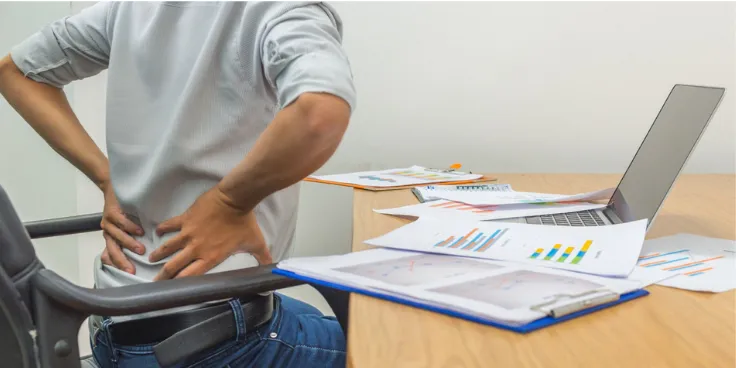
Hours hunched over a laptop, slouching on a sofa or looking down at a phone place a constant load on the lumbar discs and tire the supporting muscles, making this one of the most frequent causes of back pain reasons in working adults. The ache typically builds through the day and improves when you move around.
A “slipped disc” is not really a disc that slides out of place. It happens when the soft inner core of a disc pushes through a weak spot in its tough outer ring. The bulge can press on a nearby nerve root and cause pain, tingling, or numbness.
The levels that take the most load, L4–L5 and L5–S1, are where herniations are found most often. A slip disc L4 L5 commonly causes pain that travels from the back into the buttock, outer thigh, shin, and the top of the foot. Many disc herniations shrink on their own over weeks to months with non-surgical care.
Sciatica is not a diagnosis in itself; it describes pain along the path of the sciatic nerve. It is often caused by a herniated disc pressing on a nerve root, which is why patients and doctors frequently talk about slipped disc sciatica. The pain typically shoots down one leg, sometimes below the knee, and may feel burning or electric.
If sciatica is ignored for a long time and nerve pressure continues, symptoms can progress to weakness or loss of sensation. You can read more about the last stages of sciatica and why early assessment matters.
With age, discs gradually lose water and height. In some people, the disc can become a source of chronic, low-grade back pain that flares with sitting, bending, or lifting and eases when walking or lying down. Many others with “worn” discs on a scan have no pain at all.
The small joints at the back of the spine can develop arthritis, just like knees and hips. Facet joint pain usually feels stiff in the morning, worsens when you lean backwards or stand for long, and may spread to the buttocks without going far down the legs.
Spinal stenosis is a narrowing of the space around the spinal nerves, often due to thickened ligaments, bone spurs and bulging discs. A classic sign is heaviness, cramping or numbness in the legs while walking that improves when you sit down or bend forward, for example, leaning on a shopping trolley.
In spondylolisthesis, one vertebra slips forward over the one below it. It can result from a small stress fracture (more common in young athletes such as cricketers and gymnasts) or from age-related wear.
Osteoporosis makes bones thin and fragile, so a vertebra can crack with minimal force, even a cough or a small fall. This leads to sudden, sharp back pain and, over time, can cause loss of height or a stooped posture.
Not all back pain starts in the back. Kidney stones, kidney infections, and certain abdominal or pelvic conditions can be felt in the lower back. Lower right back pain, for instance, may come from a muscle strain, but can also be linked to a kidney stone or, less commonly, appendicitis. Pain that comes in waves, is accompanied by fever, burning urination or vomiting, or does not change with movement should be checked by a doctor promptly.
Women share all the causes above, but a few factors are specific to them. If you are looking for the reason for lower back pain in females, these are worth considering:
Pain between the shoulder blades or around the mid-spine usually has different triggers from lumbar pain. Poor neck and shoulder posture, muscle tension, and the thoracic spine are typical culprits. If your discomfort sits higher up, our guide on upper back pain reasons explains those causes in detail.
| Cause | Commonly Affects | Typical Symptoms | Usual Course |
|---|---|---|---|
| Muscle or ligament strain | All ages, after lifting or sudden movement | Ache or spasm in the back, worse on moving | Improves in days to a few weeks |
| Poor posture / prolonged sitting | Desk workers, students, drivers | Dull ache that builds through the day | Improves with movement and ergonomics |
| Slipped disc (e.g. L4–L5) | Adults aged 30–50 | Back pain with pain, tingling or numbness down one leg | Often improves in 6–12 weeks without surgery |
| Sciatica | Adults, often with disc problems | Shooting, burning pain below the knee | Most cases settle with conservative care |
| Degenerative disc disease | Adults over 40 | Chronic ache, worse with sitting or bending | Comes and goes; managed with exercise |
| Facet joint arthritis | Adults over 50 | Morning stiffness, pain on leaning back | Long-term, managed with therapy |
| Spinal stenosis | Adults over 50–60 | Leg heaviness on walking, relief on sitting | Gradual; may need specialist care |
| Spondylolisthesis | Young athletes, older adults | Back stiffness, sometimes leg pain | Varies with degree of slip |
| Osteoporotic fracture | Post-menopausal women, elderly | Sudden sharp pain after minor strain | Needs medical evaluation |
| Kidney stone/infection | Any adult | One-sided pain in waves, fever or urinary symptoms | Needs prompt medical care |
Most reasons for lower back pain are harmless, but certain symptoms can signal nerve compression, infection, fracture or other serious problems. Seek medical help immediately if you notice:
The first two symptoms can indicate cauda equina syndrome, a rare but serious condition where nerves at the base of the spine are compressed. It needs emergency treatment.
You should also book a non-urgent consultation if pain lasts beyond four to six weeks, keeps coming back, disturbs your sleep or work, or if leg pain is more severe than back pain.
A careful history and physical examination are usually enough to identify the likely cause. Your doctor will ask when the pain started, what makes it better or worse, and whether it spreads to your legs.
Effective back pain treatment depends on the cause, but most people improve with a step-by-step approach.
Home care for back pain relief
Medical and specialist care
The Orthopaedics Department at Avee Hospital offers evaluation, physiotherapy guidance, and surgical care for spine conditions.
Small, consistent changes go a long way in preventing recurrences:
If your back pain is not settling, keeps returning, or comes with any of the warning signs above, a timely consultation can save you weeks of discomfort. Dr. (Prof.) Anil K Jain and the orthopaedic team at Avee Hospital assess back and spine problems, explain the likely cause in simple terms, and plan treatment based on your symptoms, examination, and test findings.
You can find and contact Avee Hospital here to book an appointment.
Muscle or ligament strain is the most common cause, often triggered by lifting, sudden movements or poor posture. It usually improves within a few weeks with gentle activity and self-care.
In many people, yes. A large share of disc herniations shrink over time, and symptoms often settle within 6 to 12 weeks with physiotherapy, activity changes and medicines advised by a doctor. Surgery is generally considered when pain persists despite treatment or when there is nerve weakness or bladder or bowel involvement.
One-sided pain is often muscular, but it can also come from the kidney, an appendix problem or, in women, ovarian or pelvic conditions. Pain with fever, urinary symptoms or vomiting needs prompt medical attention.
For most types of mechanical back pain, regular gentle walking helps by improving blood flow and reducing stiffness. If walking causes leg pain that eases on sitting, mention this to your doctor, as it can point to spinal stenosis.
Along with the usual causes, women may experience back pain linked to periods, endometriosis, pregnancy and post-menopausal bone thinning. Persistent or cyclical pain should be checked by a doctor.
See a doctor urgently if you have bladder or bowel changes, groin numbness, worsening leg weakness, fever, or pain after an injury. Book a routine visit if pain lasts more than four to six weeks or keeps returning.
Lower back pain is extremely common, and most episodes are caused by everyday mechanical problems that improve with time, movement and sensible care. Knowing the reasons for lower back pain helps you respond calmly, avoid unnecessary worry and, just as importantly, recognise the red flags that need prompt attention. If your pain is persistent, spreading into your legs or affecting your daily life, do not ignore it. Get it assessed by a qualified orthopaedic specialist.