Lower Right Back Pain
- Home
- Lower Right Back Pain
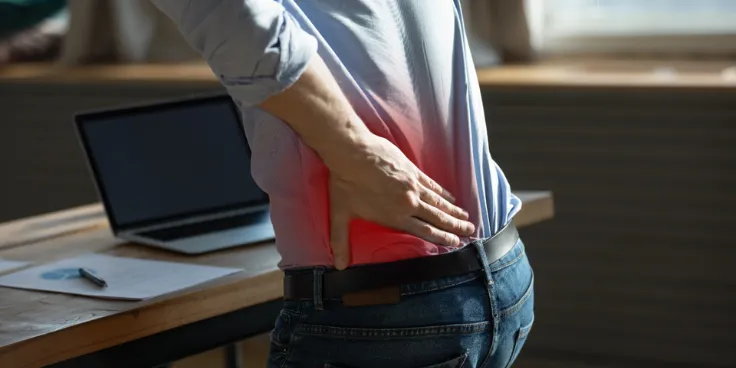
You bend down to pick up a bag, twist to reach the back seat of your car, or simply wake up one morning, and there it is: a dull, stubborn ache just above your right hip. For some people it fades in a few days. For others, it keeps returning, interrupting sleep, work and simple pleasures like an evening walk.
Lower right back pain is one of the most common complaints we see in our outpatient clinics. In most cases, it comes from the muscles, joints or discs of the lower spine and settles with simple care. Sometimes, though, pain on one side points to something that needs prompt attention, such as a kidney stone or a nerve being pinched by a slipped disc.
Prepared by the orthopaedic and spine team at Avee Hospital, Vaishali, Ghaziabad, walks you through the likely causes, the symptoms that set them apart, how doctors reach a diagnosis, and practical ways to find relief. Our aim is simple: to help you understand your pain, so you know when to rest, when to move, and when to see a specialist.
Your lower back, or lumbar spine, is made of five vertebrae stacked on top of the sacrum and pelvis. Between each pair of vertebrae sits a cushioning disc. Small facet joints link the bones at the back, and on either side the sacroiliac (SI) joint connects the spine to the pelvis. Layers of muscle, ligaments and nerves wrap around all of this.
Because these structures come in pairs, a problem can easily affect just one side. A strained muscle on the right, a disc bulging towards the right nerve root, or an irritated right SI joint will all produce one side back pain, even though the spine itself sits in the middle.
The right side of your lower back also lies close to several organs, including the right kidney, the appendix, part of the colon and, in women, the right ovary. That is why doctors look at back pain reasons both inside and outside the spine before deciding on treatment.
Most lower back pain causes are mechanical, meaning they come from the way the spine and its supporting tissues move, carry load and age. Here are the ones our doctors see most often.
Lifting with a rounded back, a sudden twist or an unaccustomed workout can overstretch or tear muscle fibres. The pain is usually sharp at first, then turns into a tight, sore ache that worsens with movement and eases with rest. Most strains settle within two to six weeks.
When the soft centre of a disc pushes through its outer ring, it can press on a nearby nerve. If the bulge points to the right, pain may shoot down the right buttock and leg (sciatica), often with tingling, numbness or weakness in the foot.
Wear and tear in the small joints at the back of the spine causes a localised ache that is often worse in the morning, after long standing, or when leaning backwards.
Too much or too little movement in the SI joint produces pain low down, near the dimple above the buttock. It can be triggered by pregnancy, a fall, uneven leg length or prolonged sitting.
Narrowing of the spinal canal, common after the age of 50, can squeeze the nerves. People typically feel leg heaviness or pain while walking that improves when they sit or bend forward.
Long hours at a desk, slouching over a phone, carrying a heavy bag on one shoulder, excess body weight and mild scoliosis can all load one side of the back more than the other.
Not all reasons for lower back pain start in the back. Pain from nearby organs can be felt in the same area, and these causes need medical, not just orthopaedic, care.
The way pain feels, where it spreads and what makes it better or worse gives your doctor valuable clues. Use this table as a general guide, not a self-diagnosis tool.
| Possible Cause | How the Pain Feels | Other Signs to Notice | Who Is Commonly Affected |
|---|---|---|---|
| Muscle or ligament strain | Tight, sore ache; worse with movement | Muscle spasm, stiffness, local tenderness | Active adults, gym-goers, people who lift |
| Herniated disc | Sharp or burning pain spreading to the buttock and leg | Tingling, numbness, leg or foot weakness | Ages 30–50, desk workers, heavy lifters |
| Facet joint arthritis | Dull, local ache; worse when leaning back | Morning stiffness that eases with movement | Adults over 50 |
| SI joint dysfunction | Low ache near the buttock dimple | Pain on standing up, climbing stairs or turning in bed | Pregnant women, people after a fall |
| Spinal stenosis | Leg heaviness or cramping while walking | Relief on sitting or bending forward | Older adults |
| Kidney stone | Severe, colicky pain under the ribs, spreading to the groin | Blood in urine, nausea, restlessness | Adults with low water intake |
| Kidney infection | Deep, constant ache in the flank | Fever, chills, painful or frequent urination | Women, people with diabetes |
| Appendicitis | Pain moving to the lower right abdomen | Fever, vomiting, loss of appetite | Children, teens and young adults |
Most back pain improves with time and sensible self-care. However, please see a doctor immediately, or visit an emergency department, if you notice any of the following:
The first two signs can indicate cauda equina syndrome, a rare but serious nerve compression that needs surgery within hours to protect nerve function.
An accurate diagnosis is the foundation of effective care. At Avee Hospital, the process usually includes:
Not every back problem is a nerve or cord problem. Our article on why not all spine injuries damage the spinal cord explains how doctors tell the difference, and why it matters for spine pain recovery.
For mild to moderate mechanical pain without red flags, these measures help most people recover faster:
If these steps do not bring back pain relief within a couple of weeks, or the pain keeps coming back, it is time for a specialist assessment.
When pain persists, a tailored plan works best. Treatment usually follows a step-up approach, starting with the least invasive option.
A structured programme of core strengthening, flexibility work, manual therapy and posture training is the backbone of recovery for most patients. It also lowers the chance of the pain returning.
Depending on the cause, your doctor may prescribe anti-inflammatory medicines, muscle relaxants or nerve-pain medicines for a limited period. Kidney or gynaecological causes are treated with their own specific medicines.
For disc or joint pain that does not settle, epidural steroid injections, facet joint injections, SI joint injections or radiofrequency ablation can calm inflamed nerves and help you get more out of physiotherapy.
Only a small proportion of people with back pain need an operation. Surgery is considered for severe or progressive nerve weakness, cauda equina syndrome, or pain that has not improved after a fair trial of non-surgical care. Options include microdiscectomy, endoscopic spine surgery, decompression for stenosis and spinal fusion for instability. Minimally invasive techniques mean smaller cuts, less pain and a quicker return to daily life.
To learn more about the procedures available, explore spine pain treatment at Avee Hospital.
Living with persistent back pain affects your work, sleep and mood. Getting the right diagnosis early often means simpler treatment and a faster recovery.
At Avee Hospital, Vaishali, back and spine problems are managed by the Orthopaedics Department, led by Dr. (Prof.) Anil K Jain, Head of the Department. An MBBS and MS in Orthopaedics with more than four decades of experience, he treats conditions such as herniated discs, sciatica, scoliosis and degenerative spine disease, using both conservative care and modern minimally invasive techniques.
What patients can expect:
If you are looking for an experienced spine surgeon in Ghaziabad, you can book an OPD consultation with Dr. (Prof.) Anil K Jain at Avee Hospital, Monday to Saturday, 10:00 AM to 1:00 PM.
Usually not. Most cases come from a muscle strain or a minor joint or disc problem and improve within a few weeks. It becomes serious when it comes with fever, urinary symptoms, severe abdominal pain, leg weakness or loss of bladder or bowel control.
Kidney pain is usually deeper, higher up under the ribs, and does not change much with movement. It often comes with fever, burning urination or blood in the urine. Back pain from muscles or joints typically changes with posture and movement.
For a simple strain, gentle movement, a cold pack in the first two days and heat after that, along with correct posture, bring the quickest relief for most people. Pain that does not improve in two weeks should be checked by a doctor.
Yes. Slouching, leaning to one side, crossing your legs or sitting without lumbar support puts uneven pressure on the discs, joints and muscles. Regular breaks and an ergonomic workstation make a big difference.
See a specialist if pain lasts longer than four to six weeks, keeps coming back, spreads down your leg, or causes numbness, tingling or weakness.
No. Most herniated discs improve with physiotherapy, medicines and, if needed, injections. Surgery is reserved for severe nerve compression, progressive weakness or pain that does not respond to non-surgical treatment.
Yes. Ovarian cysts, endometriosis, menstrual cramps and pregnancy can all cause pain on the right side of the lower back. A gynaecological check-up may be advised along with a spine assessment.
Lower right back pain is common and, in most cases, treatable without surgery. Understanding where it comes from, whether a strained muscle, a bulging disc, an irritated joint or a nearby organ, is the key to the right treatment. Stay active, look after your posture and pay attention to warning signs.
If your pain is not going away, or it is affecting your daily life, do not wait for it to get worse. Book a consultation with Dr. (Prof.) Anil K Jain at Avee Hospital, Vaishali, Ghaziabad, for a thorough evaluation and a treatment plan built around you.