Lower Back Pain Right Side
- Home
- Lower Back Pain Right Side
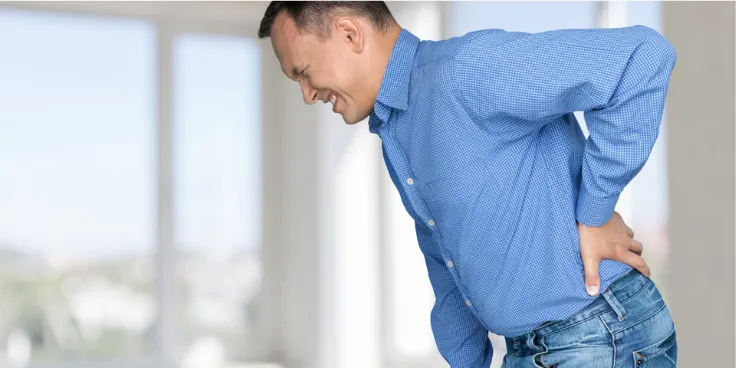
Most of us shrug off back pain. We blame a soft mattress, a long drive or a heavy shopping bag, and we wait for it to pass. Usually it does. But lower back pain right side is a little different from a general ache across the spine. Because several organs sit close to that area, including the right kidney, the appendix, the liver and, in women, the right ovary, pain on one side can sometimes point to more than a pulled muscle.
The orthopaedic team at Avee Hospital explains why the right side of your lower back may hurt, the seven warning signs that call for prompt medical attention, and the safe steps you can take at home for quick relief. The aim is simple: to help you tell the difference between an ache you can manage and a symptom you should never ignore.
The lower back is a busy neighbourhood. It holds five lumbar vertebrae, the cushioning discs between them, a web of muscles and ligaments, and the nerves that travel down to your legs. Right in front of it, deeper inside the body, sit the kidney, the large intestine and the appendix. That is why lower right back pain can come from the spine itself or from an organ nearby.
Broadly, the causes fall into two groups.
Spine and musculoskeletal causes (the most common)
Organ-related causes (less common, but more urgent)
If you want a deeper look at every cause, our detailed guide on the reasons for lower back pain covers each one in turn. The key point is this: most one-sided back pain is mechanical and settles with care. The warning signs below help you spot the cases that are not.
Doctors call these “red flags” because they can signal nerve compression, infection, a fracture or an organ problem. If your lower back pain right side comes with any of the following, book a medical review promptly. The first three need emergency care.
Numbness around the inner thighs, genitals or buttocks (“saddle anaesthesia”), or new trouble passing urine or controlling your bowels, can point to cauda equina syndrome. This is a rare but serious compression of the nerve bundle at the base of the spine. It needs emergency surgery assessment within hours, not days.
Pain that travels below the knee, pins and needles in the foot, or a foot that slaps or drags while walking suggests a pinched nerve. This is the classic picture of sciatica, often caused by a disc pressing on the nerve root. Progressive weakness must never be ignored.
Back pain with fever may mean a kidney infection or, more rarely, an infection in the spine. Pain under the right ribs that spreads to the groin, along with burning urination or blood in the urine, often points to a kidney stone or pyelonephritis.
Sharp pain that builds over a few hours, sits in the lower right abdomen and back, and comes with nausea, vomiting or loss of appetite could be appendicitis. Do not apply heat or take strong painkillers to mask it. Go to an emergency department.
Even a minor fall can fracture a vertebra in people with osteoporosis, older adults, or those on long-term steroids. Any back pain after trauma deserves an X-ray or scan.
Pain that does not ease with rest, wakes you from sleep, or comes with weight loss you cannot explain should be checked. These signs are uncommon, but they can be linked to infection or, rarely, a tumour.
Most mechanical back pain improves within a few weeks. If yours has not, or keeps returning, a structural problem such as a disc herniation, SI joint dysfunction, or stenosis may be the cause. Our page on lower right back pain explains how specialists investigate persistent one-sided pain.
Use this table as a rough guide to the common causes of right-sided lower back pain, their typical features and how soon you should be seen. It does not replace a clinical examination.
| Possible cause | Typical pain pattern | Other clues | How urgent? |
|---|---|---|---|
| Muscle strain or sprain | Dull ache or spasm, worse with movement | Follows lifting, twisting or exercise | Home care; see a doctor if no better in 1–2 weeks |
| Slip disc (herniated disc) | Sharp pain radiating to buttock and leg | Tingling, numbness, worse on sitting or bending | Doctor within days; urgent if weakness appears |
| Sacroiliac joint dysfunction | Pain just above the buttock on one side | Worse on standing up, climbing stairs | Routine orthopaedic review |
| Kidney stone | Severe, wave-like pain from flank to groin | Blood in urine, nausea, restlessness | Same day |
| Kidney infection | Constant ache under the ribs at the back | Fever, chills, burning urination | Same day |
| Appendicitis | Pain moving to lower right abdomen and back | Nausea, vomiting, fever, loss of appetite | Emergency |
| Cauda equina syndrome | Back pain with leg weakness | Saddle numbness, bladder or bowel changes | Emergency |
| Spinal stenosis | Ache in back and legs on walking | Eases on sitting or leaning forward | Routine specialist review |
The L4–L5 level, between the fourth and fifth lumbar vertebrae, carries much of the body’s weight and bends more than almost any other part of the spine. That makes it the most common site for a disc to bulge or rupture. When the disc pushes to one side, it can press on the nerve root on that side, which is why a slip disc L4 L5 often causes pain on just the right or the left.
Common symptoms of an L4–L5 disc problem include:
The good news is that most disc herniations improve without surgery. Rest for a short period, guided physiotherapy, anti-inflammatory medicines and core-strengthening exercises help many patients recover within six to twelve weeks. Surgery is usually considered only when there is severe nerve compression, worsening weakness or pain that does not respond to treatment. You can read more about symptoms, scans, and treatment options in our guide to slip disc L4 L5.
Where you feel the pain helps your doctor narrow down the cause. The upper (thoracic) spine is anchored to the rib cage, so it moves less and is injured less often. Common upper back pain reasons include hunching over screens, weak shoulder muscles, rib joint irritation and, occasionally, gallbladder, heart or lung problems. Pain between the shoulder blades that comes with breathlessness, chest tightness or sweating needs emergency care.
The lower (lumbar) spine, by contrast, bears most of your body weight and does most of the bending and twisting. That is why discs, joints and muscles there wear out or get injured more easily. If your discomfort sits higher up, our article on upper back pain reasons explains what to look out for.
There is no magic switch, but if there are no red flags, these steps can ease mild, muscle-related pain quickly. Many people searching for how to get rid of back pain instantly find that a combination of the methods below brings relief within minutes to hours.
If the pain is no better within a week, or any warning sign from the list above appears, stop home treatment and get a proper assessment.
A correct diagnosis is the first step to lasting relief. At the Orthopaedics Department of Avee Hospital, every patient with lower back pain right side starts with a detailed conversation about how the pain began, what makes it better or worse, and any red-flag symptoms. This is followed by a hands-on examination of posture, spinal movement, reflexes, muscle strength and sensation in the legs.
Depending on what the examination finds, your doctor may recommend:
Treatment is tailored to the cause and to your daily life. Most patients improve with conservative care: medicines, targeted physiotherapy, posture correction and a home exercise plan. For stubborn nerve pain, image-guided spinal injections may be an option. Surgery is reserved for the small number of patients with severe nerve compression, instability or pain that has not responded to other treatment.
Patients are guided by Dr. (Prof.) Anil K Jain, senior orthopaedic surgeon at Avee Hospital, who leads the team’s approach of treating the root cause rather than only masking pain. If you would like to be seen, you can find Avee Hospital on Google for directions and contact details.
Usually not. Most cases come from a strained muscle, a stiff joint, or poor posture and improve within a few weeks. It becomes serious when it comes with fever, leg weakness, numbness in the groin, bladder or bowel changes, or severe abdominal pain.
Muscle pain usually changes with movement and feels tender to touch. Kidney pain sits deeper, under the ribs, often spreads to the groin, does not ease when you change position, and may come with fever or changes in urination.
Yes. A disc that bulges to the right presses on the right nerve root, so pain, tingling or numbness is felt on that side of the back, buttock and leg.
For muscle pain without red flags, combine a cold or warm compress, gentle movement, light stretching and short-term over-the-counter pain relief. If there is no improvement in a week, see a doctor.
Only briefly. One or two days of relative rest is fine, but staying active with gentle walking speeds up healing and reduces stiffness.
Book a visit if the pain lasts longer than four to six weeks, keeps returning, travels down your leg, or follows a fall or injury. Seek emergency care for any of the red-flag signs listed in this article.
Yes. Stress increases muscle tension and can make you more sensitive to pain. Relaxation, good sleep, and regular exercise often help.
Most episodes of lower back pain on the right side are short-lived and respond well to simple care. Still, your body uses pain to send a message, and some messages are urgent. Leg weakness, groin numbness, fever, sudden severe pain, or pain that simply will not go away are signs that need a doctor’s attention.
If you are unsure what is behind your discomfort, an early check-up can save weeks of worry. The spine specialists at Avee Hospital, led by Dr. (Prof.) Anil K Jain, are here to find the cause and build a treatment plan that gets you back to moving freely.