Knee Pain While Climbing Stairs: Causes, Relief & Treatment
- Home
- Knee Pain While Climbing Stairs
Vaishali,Ghaziabad’s Trusted Multispecialty Hospital | +91 8121212835
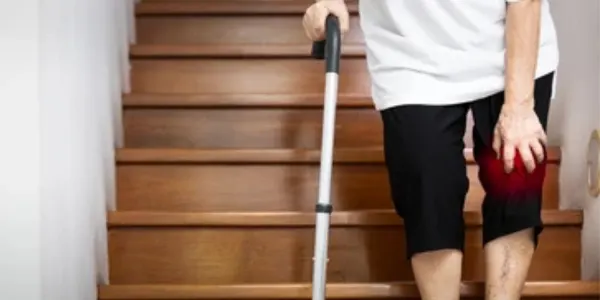
Table of Contents
Toggle
Do your knees ache or throb every time you climb a flight of stairs? You are certainly not alone. Knee pain while climbing stairs is one of the most common complaints seen by orthopaedic specialists, affecting millions of people across all age groups — from teenagers active in sports to elderly individuals dealing with wear-and-tear arthritis. The simple act of going upstairs significantly increases the load on your knee joint — up to three to four times your body weight — making underlying knee conditions instantly noticeable and often debilitating.
At Avee Hospital, our orthopaedic experts, led by the distinguished Dr. (Prof.) Anil Kumar Jain, bring decades of experience in diagnosing and treating all forms of knee pain — from simple inflammation to complex structural damage. Whether you feel a dull ache, a grinding sensation, or a sharp pain in knee while climbing stairs, understanding the root cause is the first step towards effective relief.
The table below summarises the most frequent conditions responsible for knee discomfort during stair climbing:
| Condition | Location of Pain | Common Age Group | Key Symptom | Treatment Approach |
| Patellofemoral Syndrome | Around kneecap | 15–35 years | Aching after activity | Physiotherapy, rest |
| Chondromalacia Patella | Under kneecap | Young adults | Grinding sensation | Knee cap support, exercise |
| Osteoarthritis | Entire knee joint | 45+ years | Stiffness & swelling | Medication, possible surgery |
| IT Band Syndrome | Outer knee | Runners/Athletes | Sharp lateral pain | Stretching, anti-inflammatories |
| Meniscus Tear | Inner/outer knee | All ages | Locking or clicking | Rest, surgery if severe |
| Patellar Tendinitis | Below kneecap | 20–40 years | Pain below knee on stairs | Ice, physiotherapy |
| Bursitis | Front of knee | Middle-aged adults | Swelling and warmth | Rest, corticosteroid injection |
To understand the reason for knee pain while climbing stairs, it helps to understand the biomechanics involved. Unlike walking on flat ground, stair climbing requires your quadriceps muscles to work at a greater mechanical disadvantage, forcing the kneecap (patella) to press hard against the femur (thigh bone). This patellofemoral compression is significantly higher on stairs, which is why problems that are barely noticeable on flat ground can become acutely painful when you ascend or descend steps.
Several structural, muscular, and inflammatory factors can amplify this stress, turning an everyday task into an ordeal.
Identifying the underlying cause is critical to finding lasting relief. Here are the most frequently diagnosed conditions:
This is among the leading causes of knee pain in young adults and athletes. It occurs when the cartilage under the kneecap becomes irritated due to malalignment, overuse, or muscle imbalances. Pain is typically felt around or behind the kneecap and worsens when climbing stairs, squatting, or sitting for extended periods.
This condition involves the softening and deterioration of the cartilage on the underside of the kneecap. It produces a characteristic grinding or crunching sensation during movement. Using a knee cap for knee pain (a patellar brace) can help offload pressure and provide symptomatic relief during activities like stair climbing.
A leading cause among middle-aged and older adults, knee osteoarthritis involves the progressive wearing away of protective cartilage. The result is bone-on-bone friction, causing stiffness, swelling, and pain that is especially pronounced on stairs. If you’re at this stage, you may want to understand knee replacement cost in India as a potential long-term solution.
Inflammation of the tendon connecting the kneecap to the shinbone results in pain below knee during activities that involve bending, jumping, or stair climbing. It’s particularly common in athletes engaged in high-impact sports. Avee Hospital’s sports injury treatment team is well-equipped to handle this condition.
The meniscus acts as a shock absorber between the thigh and shin bones. A torn meniscus — caused by sudden twisting or gradual degeneration — can produce a sharp, stabbing pain on the inner or outer side of the knee during stair use. Locking or clicking sensations are common warning signs.
The iliotibial (IT) band is a thick band of tissue running along the outer thigh. When it becomes too tight, it rubs against the knee bone, causing a sharp pain in knee while climbing stairs on the outer side. Runners and cyclists are particularly prone to this condition.
Bursae are fluid-filled sacs that cushion the knee joint. Repetitive motion or direct trauma can inflame these sacs, causing localised swelling, warmth, and pain — often on the front of the knee — that becomes worse with stair activity.
It’s a common misconception that knee pain is an “old person’s problem.” The causes of knee pain in young adults are varied and increasingly prevalent in today’s sedentary yet physically demanding lifestyles. Key contributors include:
Dr. (Prof.) Anil Kumar Jain at Avee Hospital often advises patients to address these modifiable risk factors early, before they progress to irreversible joint damage.
If you’re looking for immediate and long-term answers on how to reduce knee pain while climbing stairs, the following evidence-based strategies can make a meaningful difference:
Targeted exercises that strengthen the quadriceps, hamstrings, and hip abductors reduce the load on the knee joint. Straight leg raises, wall squats, and clamshells are commonly recommended. Even a modest 10–15% improvement in muscle strength can translate to noticeably less pain on stairs.
A knee cap for knee pain — also known as a patellar sleeve or knee brace — provides compression, warmth, and mild mechanical support. It helps align the kneecap and reduces inflammation. Speak to your doctor about the most appropriate type for your condition.
Lead with your stronger leg when going upstairs and with your weaker leg when descending. Use the handrail for support. Taking one step at a time reduces the bending angle at the knee and decreases pressure on the patella.
Losing even a small amount of weight can dramatically reduce knee stress. A 5 kg reduction in body weight removes approximately 20 kg of force from the knee with each step taken on a staircase.
A structured physiotherapy programme — prescribed by your orthopaedic specialist — addresses muscle imbalances, improves flexibility, and corrects movement patterns that contribute to stair-related knee pain. Avee Hospital offers comprehensive rehabilitation services as part of its orthopaedics department.
While home remedies and lifestyle changes can provide relief in mild cases, there are situations where professional knee pain treatment becomes essential. Seek immediate orthopaedic consultation if you experience:
Ignoring these warning signs can allow minor damage to progress to a state requiring surgical intervention. For guidance on avoiding this, read about knee arthritis mistakes to avoid before considering knee replacement.
Under the expert guidance of Dr. (Prof.) Anil Kumar Jain, Avee Hospital provides a comprehensive, patient-centred approach to knee pain treatment:
If you are wondering about knee replacement cost in India, Avee Hospital offers transparent pricing and world-class surgical care. All surgical options are discussed thoroughly with patients before any procedure is recommended.
Avee Hospital is a leading multispecialty healthcare facility with a renowned orthopaedics department. The hospital is committed to delivering evidence-based, compassionate care for musculoskeletal conditions, including all forms of knee pain.
Dr. (Prof.) Anil Kumar Jain is a highly respected orthopaedic surgeon with extensive experience in knee disorders, sports injuries, and joint replacement surgeries. His patient-first approach, combined with the use of the latest diagnostic tools and minimally invasive techniques, makes Avee Hospital a trusted destination for patients across India seeking effective knee pain solutions.
Prevention is always more effective than cure. Here are practical tips recommended by the specialists at Avee Hospital:
A: Sharp pain in knee while climbing stairs is often caused by conditions like patellofemoral syndrome, meniscus tears, or chondromalacia patella. The bending motion increases pressure on the kneecap, triggering pain. Consult Dr. (Prof.) Anil Kumar Jain at Avee Hospital for an accurate diagnosis.
A: The primary reason for knee pain while climbing stairs is increased stress on the patellofemoral joint. Weak quadriceps, tight hamstrings, cartilage wear, or inflammation can all contribute. A thorough orthopaedic assessment can identify the exact cause.
A: Yes. The causes of knee pain in young adults include sports injuries, overuse, flat feet, obesity, and cartilage damage. It’s not exclusively an age-related issue. Early intervention ensures better outcomes.
A: Yes, a knee cap for knee pain (patellar sleeve or brace) can provide compression, stabilise the joint, and reduce discomfort during stair climbing. However, it’s a supportive tool, not a standalone cure.
A: To reduce knee pain while climbing stairs, try low-impact strengthening exercises, use handrails, apply ice after activity, maintain a healthy weight, and wear supportive footwear. Always consult a specialist for persistent pain.
A: See a doctor if your knee pain lasts more than two weeks, worsens over time, is accompanied by swelling or locking, or affects your daily activities. Avee Hospital’s orthopaedic team is equipped to diagnose and treat all knee conditions.
A: Avee Hospital offers a full range of knee pain treatment options including physiotherapy, medication, PRP therapy, arthroscopic surgery, and knee replacement — all tailored to your specific condition and guided by Dr. (Prof.) Anil Kumar Jain.
Knee pain while climbing stairs is not something you have to simply endure. Whether it’s a dull ache, pain below knee, or a debilitating sharp pain in knee while climbing stairs, effective treatment options are available — and the sooner you seek help, the better your outcomes will be.
At Avee Hospital, Dr. (Prof.) Anil Kumar Jain and his dedicated team are committed to helping you regain pain-free mobility. From the reason for knee pain while climbing stairs to the most advanced knee pain treatment options, every step of your care journey is personalised, evidence-based, and focused on restoring your quality of life.
Book a consultation today and take the first step — painlessly.