Sports Injury Treatment
- Home
- Sports Injury Treatment
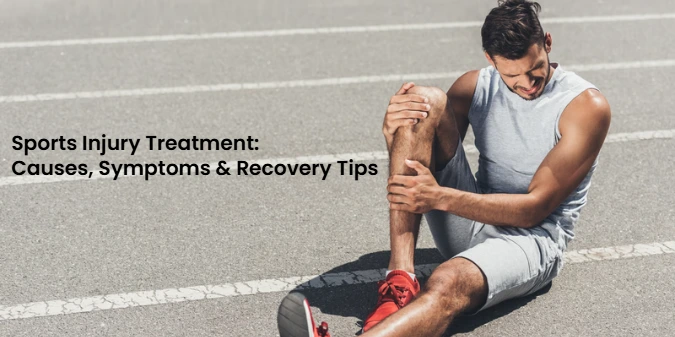
Whether you are a weekend warrior, a professional athlete, or someone who stays active for general fitness, sports injuries are an unfortunate reality. From a twisted ankle during a morning run to a torn ligament on the football field, these injuries can sideline you for days — or even months — if not managed properly.
The good news? With the right approach to sports injury treatment and rehabilitation, most people make a full recovery and return to their sport stronger than before. At Avee Hospital, our orthopaedic specialists provide evidence-based, personalised care for athletes and active individuals of all levels.
Understanding what causes sports injuries is the first step toward prevention and effective recovery. Most injuries fall into two broad categories: acute (sudden) and chronic (overuse).
These occur due to a single traumatic event — a collision, a fall, or an awkward landing. Common examples include fractures, dislocations, sprains, and muscle tears.
Repetitive stress on joints, muscles, and tendons over time leads to overuse injuries. Stress fractures, tendinitis, and runner’s knee are classic examples seen frequently in endurance athletes.
Key contributing factors include:
The table below outlines the most common sports injuries and treatment approaches recommended by orthopaedic specialists. For a personalised diagnosis, consult the experts at Avee Hospital’s Orthopaedics Department.
| Injury Type | Common Cause | Key Symptom | Treatment Approach |
| Sprain & Strain | Sudden twist or overuse | Swelling, pain | RICE method + physio |
| ACL/Knee Injury | Abrupt stops/pivots | Instability, swelling | Surgery or bracing |
| Stress Fracture | Repetitive impact | Localized bone pain | Rest + immobilization |
| Shoulder Dislocation | Fall or direct blow | Visible deformity | Reduction + rehab |
| Back Pain / Disc | Improper lifting, impact | Radiating pain | Physio, injections, surgery |
| Tennis / Golfer’s Elbow | Repetitive arm motion | Elbow tenderness | Bracing + therapy |
| Achilles Tendinopathy | Running overuse | Heel stiffness | Eccentric exercises + rest |
Not every ache or pain requires a hospital visit, but certain symptoms demand prompt attention. Ignoring warning signs can turn a minor injury into a chronic, career-limiting problem.
Seek immediate medical care if you experience:
Back pain following a sports incident, in particular, can be a red flag. Back pain and sports injury treatment requires careful evaluation — it may signal a herniated disc, nerve compression, or even a stress fracture in the vertebrae. Early imaging and diagnosis by a qualified spine specialist make all the difference in recovery outcomes.
Effective management of sports injuries follows a stepped approach — beginning with immediate first aid and progressing to specialised interventions when necessary.
For most acute soft tissue injuries, the RICE protocol remains the gold standard first response:
Once acute inflammation subsides, structured sports injury treatment and rehabilitation begins. A physiotherapist designs a graded programmed that rebuilds strength, flexibility, balance, and proprioception — the body’s sense of joint position. This phase is crucial for preventing re-injury and restoring full athletic function.
Common physiotherapy modalities include ultrasound therapy, dry needling, joint mobilisation, and sport-specific exercise progressions.
Anti-inflammatory medications can help manage pain during the early recovery phase. For more persistent conditions, corticosteroid or platelet-rich plasma (PRP) injections may be recommended to accelerate tissue healing — particularly effective for tendon injuries and joint inflammation.
Some injuries — such as complete ACL tears, complex fractures, or recurrent shoulder dislocations — may require surgery. The orthopaedic team at Avee Hospital uses minimally invasive arthroscopic techniques wherever possible to reduce recovery time and scarring.
Led by Dr. Prof. Anil K. Jain, one of India’s most respected orthopaedic surgeons, the team brings decades of experience in managing both elite athletic injuries and everyday musculoskeletal conditions.
If you are searching for reliable Sports Injury Treatment, Avee Hospital offers a comprehensive, multidisciplinary approach under one roof. From state-of-the-art diagnostic imaging to advanced surgical suites and dedicated physiotherapy, every element of your recovery is coordinated seamlessly.
What sets Avee Hospital apart:
Whether you are dealing with a fresh ankle sprain or a chronic knee condition, explore how to avoid common knee mistakes before considering surgery — an important read for anyone experiencing knee pain.
The best treatment for sports injuries is not just about addressing the physical damage — it is about rebuilding confidence, restoring movement patterns, and returning to sport safely. Here are evidence-based recovery tips to keep in mind:
For deeper guidance or to schedule a consultation with our specialists, connect with Avee Hospital today.
The RICE method — Rest, Ice, Compression, and Elevation — remains the recommended first-aid approach for most acute soft tissue injuries. Apply an ice pack for 15–20 minutes every few hours and avoid putting weight on the injured area until assessed by a healthcare professional.
Surgery is typically considered when there is complete ligament rupture (e.g., ACL tear), complex fractures, repeated joint dislocations, or when conservative treatment fails over several months. A proper clinical examination and MRI scan are essential for accurate diagnosis.
Treatment depends on the specific diagnosis. Options range from physiotherapy, bracing, and PRP injections to arthroscopic surgery for meniscal tears or ACL reconstruction. Learn more about common knee mistakes to avoid before considering replacement.
Recovery timelines vary widely. A mild sprain may resolve in 2–4 weeks, while a major ligament injury requiring surgery can take 6–12 months of structured rehabilitation. Adherence to the rehabilitation programme is the single biggest factor influencing recovery speed.
Not always, but back pain in athletes should never be dismissed without evaluation. Causes can range from muscle strain to stress fractures or disc herniation. Back pain and sports injury treatment is a speciality area at Avee Hospital — early diagnosis ensures better outcomes.
Sports Injury Treatment are rarely a dead end — they are a detour. With timely diagnosis, expert-guided treatment, and a commitment to rehabilitation, the vast majority of athletes make full recoveries and often return to their sport with improved body awareness and resilience.
At Avee Hospital, we understand that your health is your performance. Our team is here to guide you from injury to recovery — safely, effectively, and at every step of the way. Book a consultation today and take the first step back to doing what you love.