Heart Attack Aane Ke Lakshan Kya Hain?
- Home
- Heart Attack Aane Ke Lakshan Kya Hain?
Vaishali,Ghaziabad’s Trusted Multispecialty Hospital | +91 8121212835
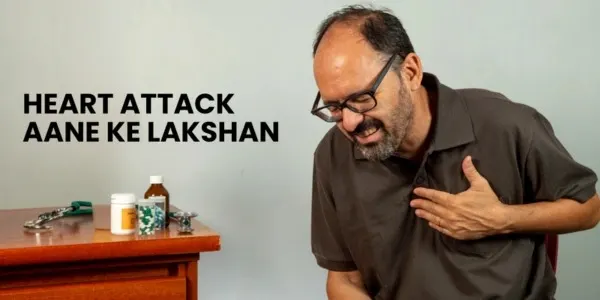
Table of Contents
Toggle
Every year, thousands of lives are lost to heart attacks — not because treatment was unavailable, but because the warning signs were missed or ignored. Understanding Heart Attack Aane Ke Lakshan early can mean the difference between life and death. Whether it is a crushing chest pain or a subtle wave of fatigue, your body often speaks before the crisis peaks. At Avee Hospital, our cardiology specialists are committed to helping you read those signals — so you never have to face a cardiac emergency unprepared.
A heart attack, medically termed myocardial infarction (MI), occurs when blood flow to a section of the heart muscle is blocked — usually by a blood clot forming on a ruptured cholesterol plaque inside a coronary artery. Deprived of oxygen, that portion of heart muscle begins to die within minutes.
This is why time is the most critical factor. Acting on early warning signs — even vague ones — and reaching emergency cardiac care swiftly can limit damage and save your life.
Most people associate a heart attack with a dramatic, movie-style collapse. In reality, symptoms often build gradually and can be deceptively mild. Here are the most common signs to watch for:
Heart attack pain is the hallmark symptom. It typically feels like:
Important: Not all heart attack pain is severe. Some people feel only mild discomfort — which is why mild symptoms must never be dismissed.
The discomfort can travel — or radiate — from the chest to the left arm (sometimes the right), the jaw, neck, shoulder blades, or upper back. If you feel unexplained pain in these areas alongside any chest unease, treat it as a red flag.
Sudden breathlessness — with or without chest pain — is a significant cardiac warning. The heart’s compromised pumping ability reduces oxygen supply to the body, leading to a feeling of suffocation even at rest.
Profuse cold sweating (diaphoresis), nausea, or a sudden wave of dizziness — particularly alongside chest discomfort — are serious warning signals. These occur as the body’s stress response kicks in due to the cardiac event.
A crushing, unusual tiredness — especially in women — several days or even weeks before a heart attack is a well-documented warning sign. If you feel exhausted without an obvious cause, do not ignore it.
A racing, fluttering, or irregular heartbeat before or during a cardiac event signals that the heart’s electrical system is under stress. Seek immediate evaluation at a cardiology OPD if this symptom persists.
Silent heart attack symptoms are perhaps the most dangerous. A silent myocardial infarction (SMI) causes little or no recognisable discomfort — meaning the person never realises they had a heart attack. Symptoms, when present, may include:
Silent heart attacks are often discovered later through an ECG (electrocardiogram), which shows characteristic changes in the heart’s electrical pattern. This is why a heart attack normal ECG reading can sometimes be misleading — a seemingly normal ECG shortly after symptom onset does not always rule out a heart attack. Serial ECGs and blood tests (troponin levels) are critical for accurate diagnosis. At Avee Hospital, our cardiac care team uses advanced diagnostic tools to ensure nothing is missed.
Why heart attack comes is a question that often surfaces after a diagnosis. The primary cause is coronary artery disease (CAD), where fatty plaques narrow the arteries. A sudden plaque rupture triggers clot formation, blocking blood flow. Key contributing risk factors include:
For a deeper understanding of triggers, read our detailed guide: What Triggers Cardiac Arrest? Understanding the Main Reasons.
Many people use these terms interchangeably, but they are distinctly different events. Understanding the difference between heart attack and cardiac arrest can be life-saving:
Think of it this way: a heart attack can trigger cardiac arrest, but they are not the same thing. Both require immediate emergency cardiac care, but the response differs — cardiac arrest demands immediate CPR and defibrillation.
The difference between heart attack and heart failure is another common point of confusion:
Heart failure is managed long-term with medications, lifestyle changes, and monitoring — whereas a heart attack demands urgent, time-critical treatment.
In both scenarios, call emergency services immediately. Do not wait to see if symptoms improve. With a heart attack:
With cardiac arrest: Begin CPR immediately and use an AED (automated external defibrillator) if available. Every minute without defibrillation reduces survival chances by around 10%.
When it comes to cardiac health, choosing the best cardiology hospital matters enormously. Avee Hospital is equipped with a state-of-the-art cardiac catheterisation laboratory, round-the-clock emergency cardiac care, and a dedicated cardiology OPD for ongoing monitoring and prevention.
Our team is led by experienced interventional cardiologists, including Dr. Ashish Srivastava, who brings years of expertise in managing complex cardiac conditions. From rapid-response primary angioplasty (primary PCI) for heart attacks to long-term cardiac rehabilitation, Avee Hospital offers comprehensive, patient-centred care under one roof.
We also encourage you to share this blog with your loved ones — because awareness saves lives. Share this article with someone who needs to know these warning signs.
While genetic factors play a role, a large portion of heart attack risk is modifiable. Here is what you can do right now:
Yes. This is known as a silent heart attack. Silent heart attack symptoms may include only mild fatigue, jaw discomfort, or shortness of breath — or even no noticeable symptoms at all. It is especially common in women, elderly individuals, and people with diabetes.
Yes, in the early stages, a heart attack normal ECG reading is possible. ECG changes may not appear immediately. That is why doctors rely on serial ECGs taken over time and blood tests (troponin markers) to confirm or rule out a heart attack.
A heart attack is caused by a blocked artery — the heart continues to beat but part of it is starved of blood. Cardiac arrest is an electrical failure — the heart stops beating altogether. The difference between heart attack and cardiac arrest lies in the mechanism: one is a plumbing problem, the other is an electrical one.
While the underlying coronary artery disease develops slowly over years, a heart attack itself can appear sudden when a vulnerable plaque ruptures and a blood clot forms rapidly. Triggers include physical exertion, emotional stress, cold temperatures, and even sleep. This explains why heart attack comes without obvious prior warning in some cases.
Heart attack is an acute event — a medical emergency caused by a blocked artery. Heart failure is a chronic, long-term condition where the heart gradually loses pumping efficiency. One is sudden; the other evolves over time.
The heart rarely goes silent without warning. Recognising Heart Attack Aane Ke Lakshan — whether it is the classic crushing heart attack pain or the subtle fatigue of a silent episode — is your first and most powerful line of defence. Understanding the difference between a heart attack and cardiac arrest, the difference between heart attack and heart failure, and knowing when to seek emergency cardiac care can save your life or the life of someone you love.
At Avee Hospital, we are here for you — from the moment you notice your first symptom to long-term cardiac recovery and prevention. Guided by expert cardiologists like Dr. Ashish Srivastava, our team delivers world-class cardiac care with a human touch.
Your heart works every second for you. Return the favour — act fast, act smart, and trust the experts.
Share this article with someone who needs it: Share on Google