Knee Ligament Tears: Causes, Symptoms, and Treatments
- Home
- Knee Ligament Tears: Causes, Symptoms, and Treatments
Vaishali,Ghaziabad’s Trusted Multispecialty Hospital | +91 8121212835
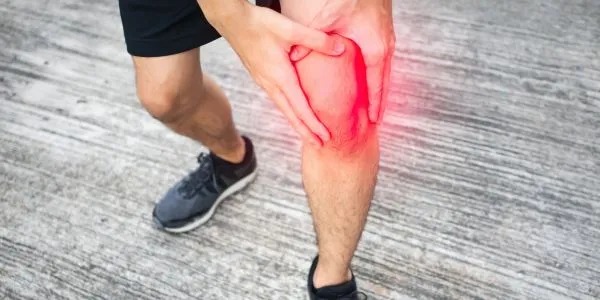
A sudden twist on the football field, an awkward landing after a jump, or a simple misstep on a wet floor can be enough to cause knee ligament tears. These injuries are among the most common reasons people of all ages visit an orthopaedic clinic, yet many patients do not fully understand what a ligament tear actually involves or how serious it can become if ignored. In this guide, we walk through the anatomy of the knee, the most frequent causes of ligament injury, the warning symptoms to watch for, and the treatment pathways recommended by Dr. Anil K Jain and the orthopaedic team at Avee Hospital.
Before discussing injury, it helps to understand what keeps the knee joint stable in the first place. The ligaments of the knee are tough bands of connective tissue that hold the thigh bone (femur) and shin bone (tibia) together, allowing controlled movement while preventing the joint from shifting too far in any direction.
There are four primary ligaments involved: the anterior cruciate ligament (ACL), the posterior cruciate ligament (PCL), the medial collateral ligament (MCL), and the lateral collateral ligament (LCL). Each plays a distinct stabilising role, and a ligament injury in the knee can affect one or more of these structures depending on the direction and force of the trauma.
Table of Contents
ToggleSo, what is ligament tear in knee terms clinically? A tear occurs when the fibres of a ligament are stretched beyond their normal capacity and partially or completely rupture. Doctors typically grade these injuries in three levels: Grade 1 involves mild stretching with the ligament still intact, Grade 2 involves partial tearing with some looseness in the joint, and Grade 3 is a complete ligament break in knee structures, resulting in significant instability.
A ligament fracture in knee terminology is sometimes used loosely by patients to describe severe tears, though technically a fracture refers to bone injury. It is common for a ligament tear in knee cases to occur alongside a bone bruise or, in more severe accidents, an actual fracture, which is why thorough imaging is essential for an accurate diagnosis.
A knee ligament injury rarely happens without a clear triggering event. The most frequent causes include:
This wide range of causes explains why a leg ligament injury is not limited to athletes alone; everyday accidents, falls, and even certain occupational hazards can result in a ligament injury in knee joints of people who have never played competitive sport.
Identifying knee ligament injury symptoms early can significantly influence recovery time and long-term joint health. Common signs include:
Not every ligament injury presents with dramatic symptoms immediately. Mild sprains can sometimes feel like ordinary soreness at first, which is why any persistent knee discomfort following a twisting or impact injury deserves a professional evaluation rather than a wait-and-see approach.
Diagnosing a ligament injury in knee patients typically begins with a detailed physical examination, including specific stability tests that assess how the joint moves under gentle pressure. This is often followed by imaging such as X-rays, to rule out associated fractures, and MRI scans, which give a clear picture of the soft tissue damage. At the Orthopaedics Department at Avee Hospital, this combined approach ensures that both bone and ligament involvement are accurately assessed before deciding on a treatment plan.
Not every knee ligament injury treatment requires surgery. Grade 1 and many Grade 2 sprains often respond well to conservative management, which typically includes:
For many patients, especially those with partial tears, this non-surgical pathway restores near-complete function within a few weeks to a few months, provided the rehabilitation programme is followed consistently.
A complete ligament break in knee structures, particularly involving the ACL, often requires surgical reconstruction, especially in younger, active patients who wish to return to sport. Dr. Anil K Jain notes that surgical decisions are always individualised, factoring in the patient’s age, activity level, occupation, and the specific ligament involved. Reconstructive surgery typically uses a tissue graft to rebuild the damaged ligament, followed by a structured rehabilitation programme lasting several months.
Multi-ligament injuries, often seen after high-impact trauma, generally require more complex surgical planning and a longer recovery timeline, underscoring the importance of an experienced orthopaedic team managing the case from diagnosis through rehabilitation.
Recovery from ligament injury varies significantly depending on the grade of the tear and whether surgery was required. The table below offers a general overview, though individual timelines should always be confirmed with your treating orthopaedic surgeon.
Injury Grade | Typical Treatment | Approximate Recovery Time |
Grade 1 (mild sprain) | Rest, ice, physiotherapy | 2 to 4 weeks |
Grade 2 (partial tear) | Bracing, structured physiotherapy | 6 to 8 weeks |
Grade 3 (complete tear) | Often requires surgical reconstruction | 6 to 9 months |
Multi-ligament injury | Surgery plus extended rehabilitation | 9 to 12 months |
While not every accident can be prevented, certain habits meaningfully reduce the risk of a repeat ligament tear in knee joints:
Patients sometimes confuse a ligament injury with meniscus tears, tendon strains, or general joint inflammation, since the initial pain and swelling can feel similar. However, a true ligament injury in knee joints is usually associated with a specific traumatic event, a distinct popping sensation, and a feeling of instability that is less common with wear-and-tear conditions such as osteoarthritis. Meniscus injuries, by comparison, often present with catching or locking sensations rather than instability.
This distinction matters because the treatment pathways differ substantially. Misdiagnosing a ligament tear in knee patients as a simple muscular strain can delay appropriate care, allowing the joint to remain unstable and increasing the risk of secondary cartilage damage over time. This is precisely why a proper clinical examination, supported by imaging where needed, remains the gold standard for confirming the exact nature of a knee injury before treatment begins.
During recovery from a knee ligament injury, small daily adjustments can make a noticeable difference to comfort and healing speed. Using a supportive brace during longer periods of standing, avoiding stairs where possible in the early weeks, and sleeping with a pillow under the knee for gentle support are all commonly recommended by physiotherapists.
Delaying treatment for a suspected knee ligament injury can lead to chronic instability, cartilage damage, and early-onset arthritis in the affected joint. Dr. Anil K Jain emphasises that timely diagnosis, even for injuries that initially seem minor, gives patients the best chance of a full, lasting recovery. You can visit Avee Hospital’s location and book a consultation here for a thorough knee evaluation.
It is an injury where the fibres of one of the knee’s stabilising ligaments stretch or rupture, usually due to a sudden twist, impact, or hyperextension of the joint.
Treatment depends on the grade of the tear, the specific ligament involved, the patient’s activity level, and overall joint stability, ranging from physiotherapy alone to surgical reconstruction.
Yes, many mild to moderate tears heal well with rest, bracing, and physiotherapy, though complete tears, particularly of the ACL, often require surgical repair for active individuals.
Patients often report a popping sound at the time of injury, followed by swelling, pain, and a sensation of the knee feeling unstable or giving way during movement.
Recovery ranges from a few weeks for mild sprains to nine months or more for complete tears requiring surgical reconstruction and extended rehabilitation.
Knee ligament tears can range from a minor inconvenience to a serious, life-altering injury if left untreated. Recognizing the symptoms early and seeking prompt orthopedic care makes a significant difference to long-term joint health. For a detailed evaluation, the specialists at Avee Hospital’s Orthopaedics Department are equipped to guide you through diagnosis, treatment, and full recovery.